Net Metering
Your meter spins both ways. Solar power you export to the grid is credited against the power you pull at night and on cloudy days. Effectively, the grid acts as a free battery.

The four billing structures that decide what your utility pays for solar electricity you export to the grid. Net Metering, Buy All, MA SMART, RI REG — broken down state by state.
By the numbers
Before the state-specific stuff, the four building blocks. The combination you end up on depends on your state, your utility, and how you live in your home.
Your meter spins both ways. Solar power you export to the grid is credited against the power you pull at night and on cloudy days. Effectively, the grid acts as a free battery.
Your utility buys 100% of your solar production at a fixed contract rate, then sells you 100% of your home’s consumption at retail. Two separate prices.
Massachusetts SMART and Rhode Island REG add a per-kWh production-based payment on top of net metering, locked in for 10 – 20 years depending on the program block.
We model both Net Metering and Buy-All for your specific consumption profile in Aurora. Heavy daytime users (EV chargers, AC) usually want Net Metering; minimal home loads usually want Buy-All. We show the math.
The same general logic — net metering or production-based payment — implemented differently in each Teamsun service state.
Connecticut’s Residential Renewable Energy Solutions (RRES) replaced traditional net metering. Customers pick between Netting (rolling credits like classic net metering) and Buy-All (fixed contract rate for all production).
Program
RRES tariff
Eversource and United Illuminating administer
Choice
Netting / Buy-All
Selected at PTO, locked annually
Term
20 years
Contract length once enrolled
Best fit
Daytime users
EV charging, AC, daytime work-from-home
Standard net metering plus the SMART production-based incentive where SMART blocks remain open. Net metering credits roll forward indefinitely; SMART pays a per-kWh adder for 10 years.
Program
Net Metering + SMART
DPU-administered
SMART term
10 years
Per-kWh adder, block-based
Cap
System-size based
Residential typically 25 kW or under
Best fit
Most homeowners
SMART is the highest-yield MA path while open
Rhode Island offers traditional Net Metering or Renewable Energy Growth (REG), a performance-based program with a per-kWh ceiling rate set annually. You choose one — they do not stack.
Program
Net Metering OR REG
RIPUC-administered
REG term
15 – 20 years
Locked at enrollment block ceiling
Choice
Pick one
Net metering and REG do not stack
Best fit
Depends
REG for consistent producers; NM for variable load
The wrong tariff costs homeowners thousands over 20 years. We model both before you sign and re-check every year for CT customers.
Every Teamsun proposal includes a side-by-side projection of Net Metering vs. Buy-All (CT) or NM vs. REG (RI) over 20 years for your specific roof and load profile.
When your system goes live, your utility asks which tariff you want. Teamsun submits the choice on your behalf based on the proposal we ran together.
CT RRES customers can re-select their tariff annually. We email you each year with a refreshed model and the deadline — no missed cutoffs.
If your utility bill ever looks wrong, you call our Bristol office. We pull your monitoring data, decode the tariff line items, and call the utility on your behalf when needed.

A 15-minute call, then a remote or on-site visit. Aurora-based design, panel and battery brand named on the proposal.
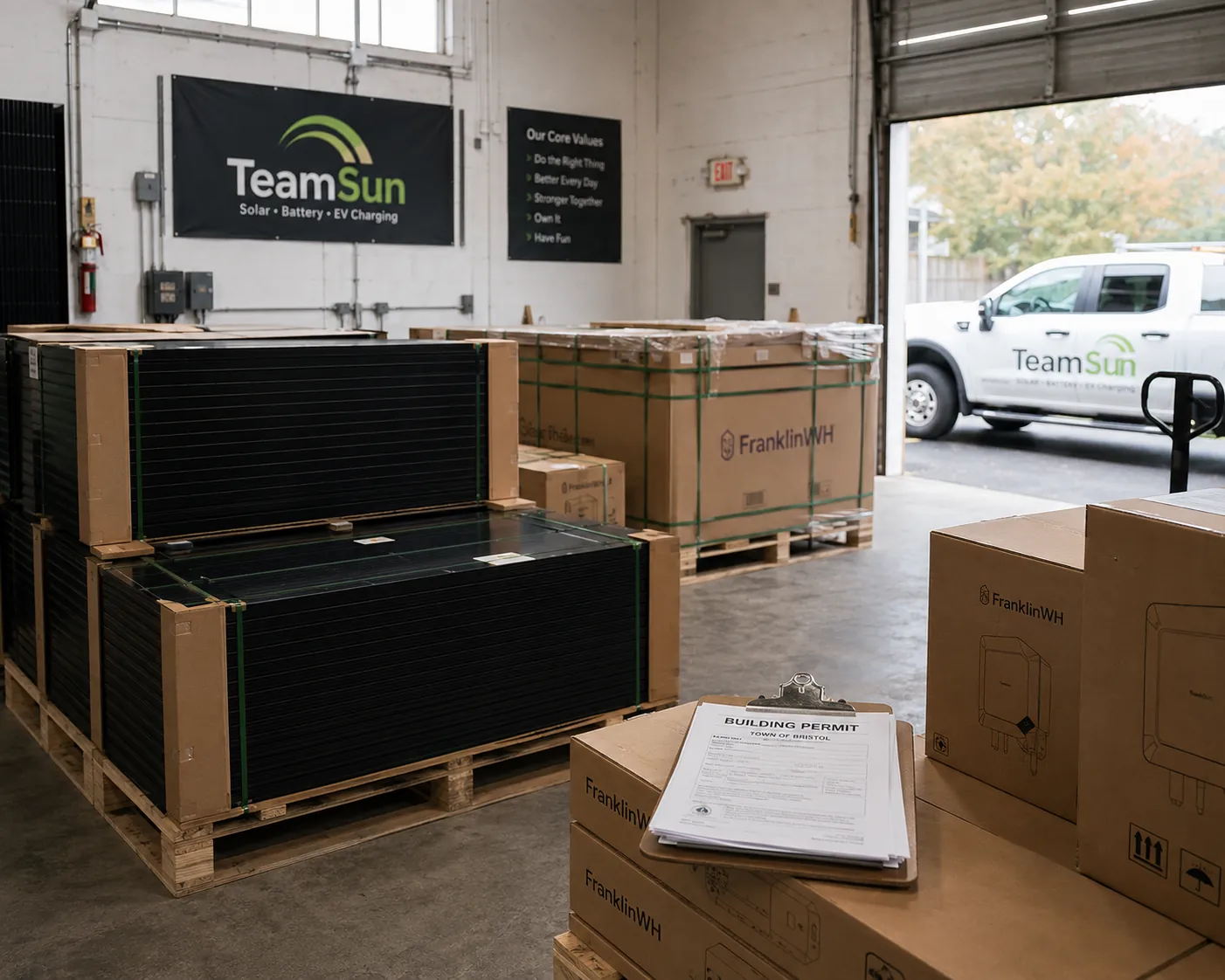
Permits filed, utility interconnection submitted, and equipment staged at our Bristol warehouse.

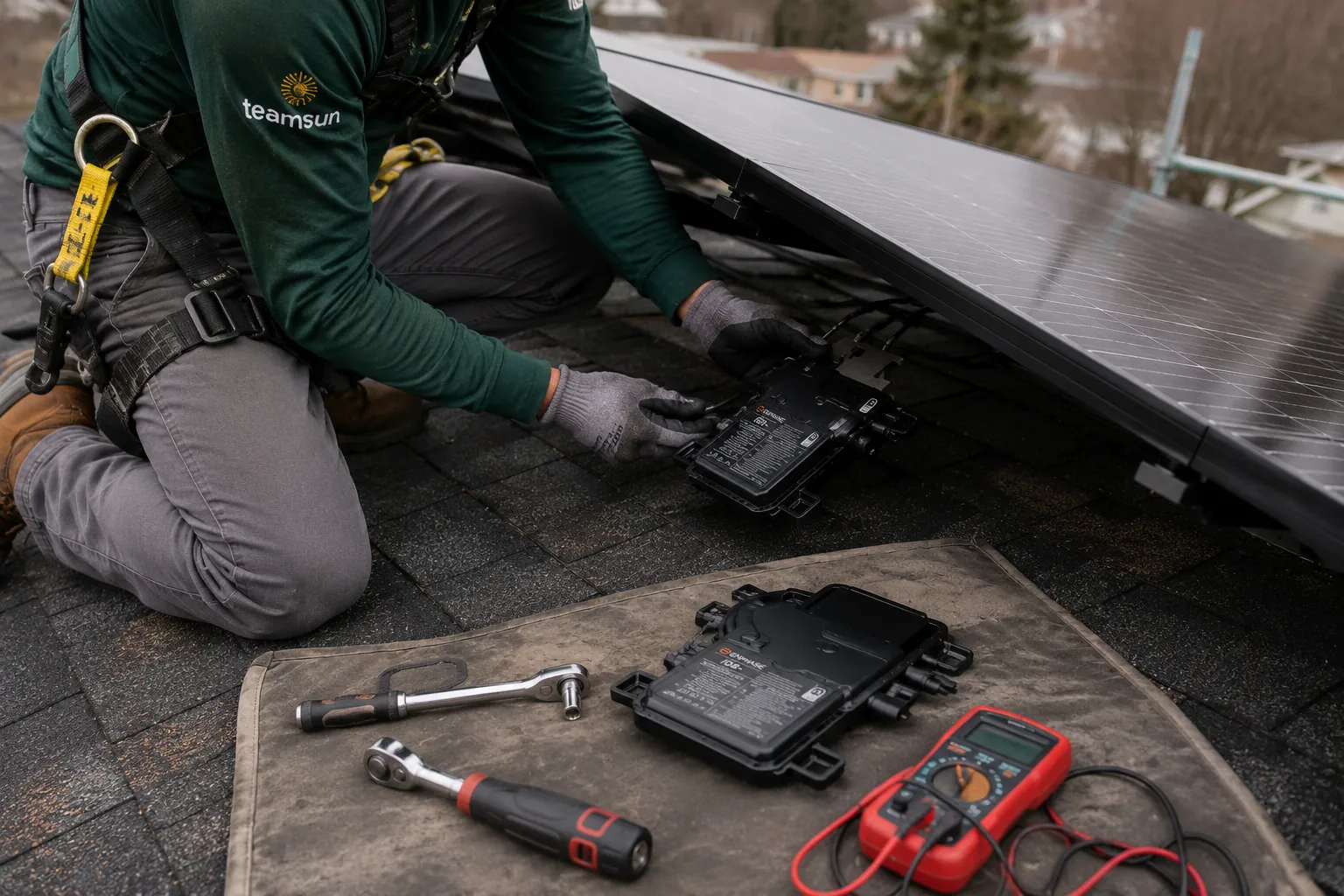
Local crew, local trucks. Most systems installed & completed in one day. Final inspection scheduled before we leave.
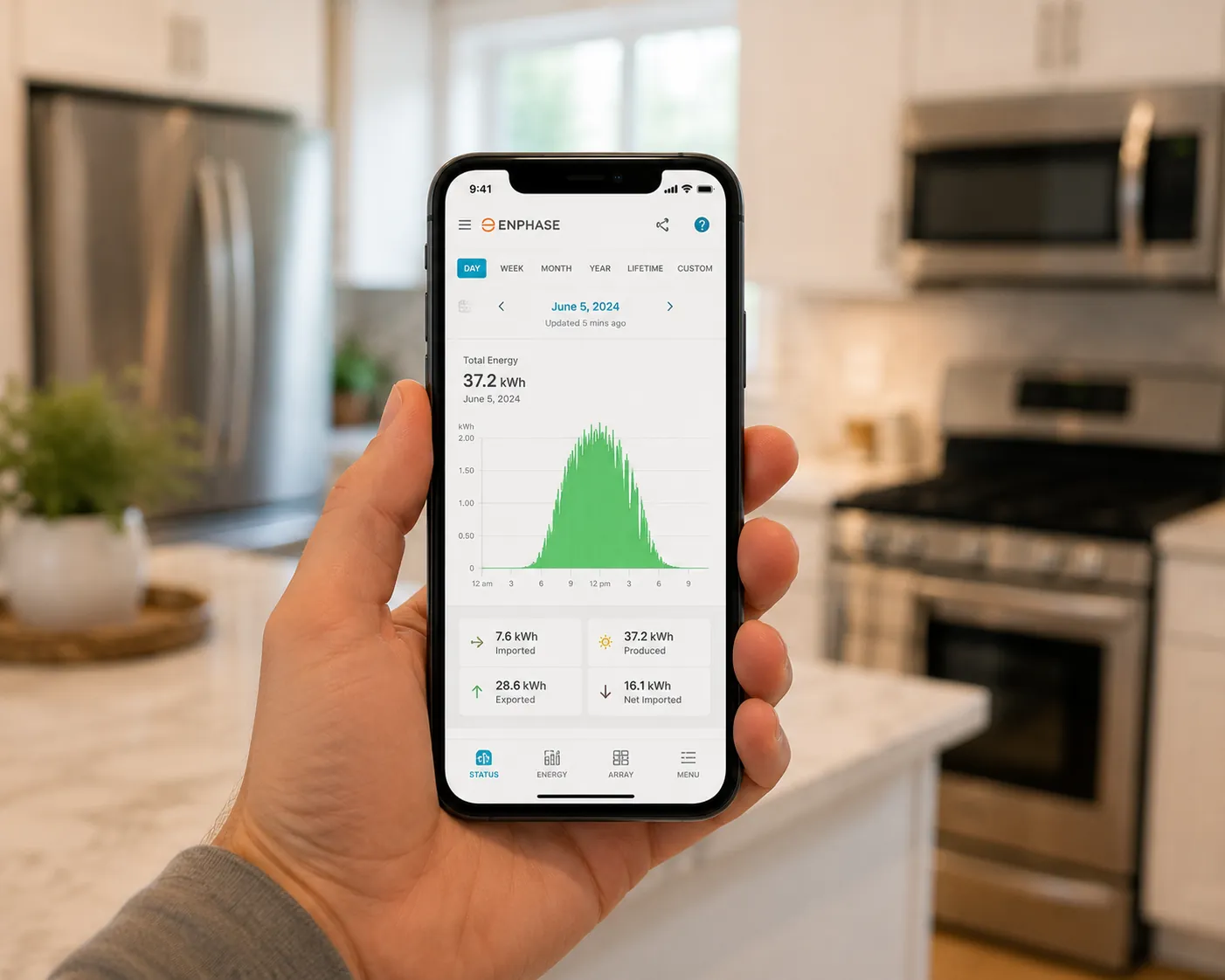
PTO from your utility, ITC and rebate paperwork filed, and 25 years of local service after the system goes live.
“Teamsun was the only crew that walked the roof, named the panel brand, and answered every question without checking with someone. Same lead tech came back a year later when I added a battery.”

“Three of my neighbors had Teamsun, so I called them. The crew was on my street five days after I signed.”

“They knew the historic district secretary by first name. Saved us six weeks on permitting alone.”

“Same lead tech who installed it came back four years later to swap an inverter under warranty. No charge, no excuses.”
Net metering credits the solar electricity you send to the grid against the electricity you pull from the grid, on a one-to-one or near-one-to-one basis. If your solar produces more in a month than your home consumes, the excess rolls forward as a credit. If you consume more, you pay the difference at retail.
A two-meter structure where the utility purchases 100% of your solar production at a fixed contract rate, and you continue to buy 100% of your home consumption at retail. The two prices are different. In Connecticut, Buy-All is one of the two RRES tariff options.
Traditional net metering closed to new enrollments in 2022. The successor program is RRES (Residential Renewable Energy Solutions), which offers a Netting tariff (functionally similar to net metering) and a Buy-All tariff. Existing pre-2022 net metering customers were grandfathered for the remaining contract term.
Depends on your daytime consumption. Heavy daytime users (EV chargers, AC, work-from-home) usually do better on Netting because they self-consume more solar at retail value. Low-daytime users (commuters, smaller homes) often do better on Buy-All because the fixed contract rate exceeds what their self-consumption would save them. Teamsun models both on every Aurora proposal.
Solar Massachusetts Renewable Target — a per-kWh production-based incentive that pays you for every kWh your solar produces, on top of net metering. SMART is administered by your utility under MA DPU oversight and is broken into "blocks" that fill on a first-come basis. When a block is full, the program adjusts.
Renewable Energy Growth — a performance-based program where you sell your solar production to your utility at a per-kWh ceiling rate locked in for 15 – 20 years. Unlike net metering, you do not self-consume the solar; you sell it all and buy your home power separately. REG and Net Metering do not stack — you pick one.
CT RRES customers can re-select Netting vs. Buy-All annually. MA and RI customers are locked into their initial choice for the full contract term. Teamsun emails CT customers each year with the deadline and a refreshed model.
For commercial systems: yes. The up-to-40% federal ITC is a tax credit on system cost; net metering, RRES, SMART, and REG are utility programs that affect ongoing bill economics. They are independent and stack fully. Residential ITC no longer applies in New England, so the residential stack is purely state-and-utility programs plus bill savings.
Net metering, RRES, SMART, and REG all continue to apply to your solar. Adding a battery may also unlock CT ESS (Connecticut) or Connected Solutions (Massachusetts) demand-response payments — see those incentive pages for details.
Yes — each program is administered by the investor-owned utilities in its state. Connecticut: Eversource and United Illuminating. Massachusetts: National Grid, Eversource MA, and Unitil. Rhode Island: Rhode Island Energy. Municipal utility customers (CT Norwich, MA Holyoke, etc.) follow separate net-metering rules.
State-by-state payback
Sizing and quotes
Tell Teamsun about your property, energy goals, and questions. We will help you identify the right next step for the project.
Start with the property
Share the address,
utility, and project goal.
Confirm availability
Teamsun will confirm
coverage for your address.
Match the next step
Solar, storage, roofing,
EV charging, or service.