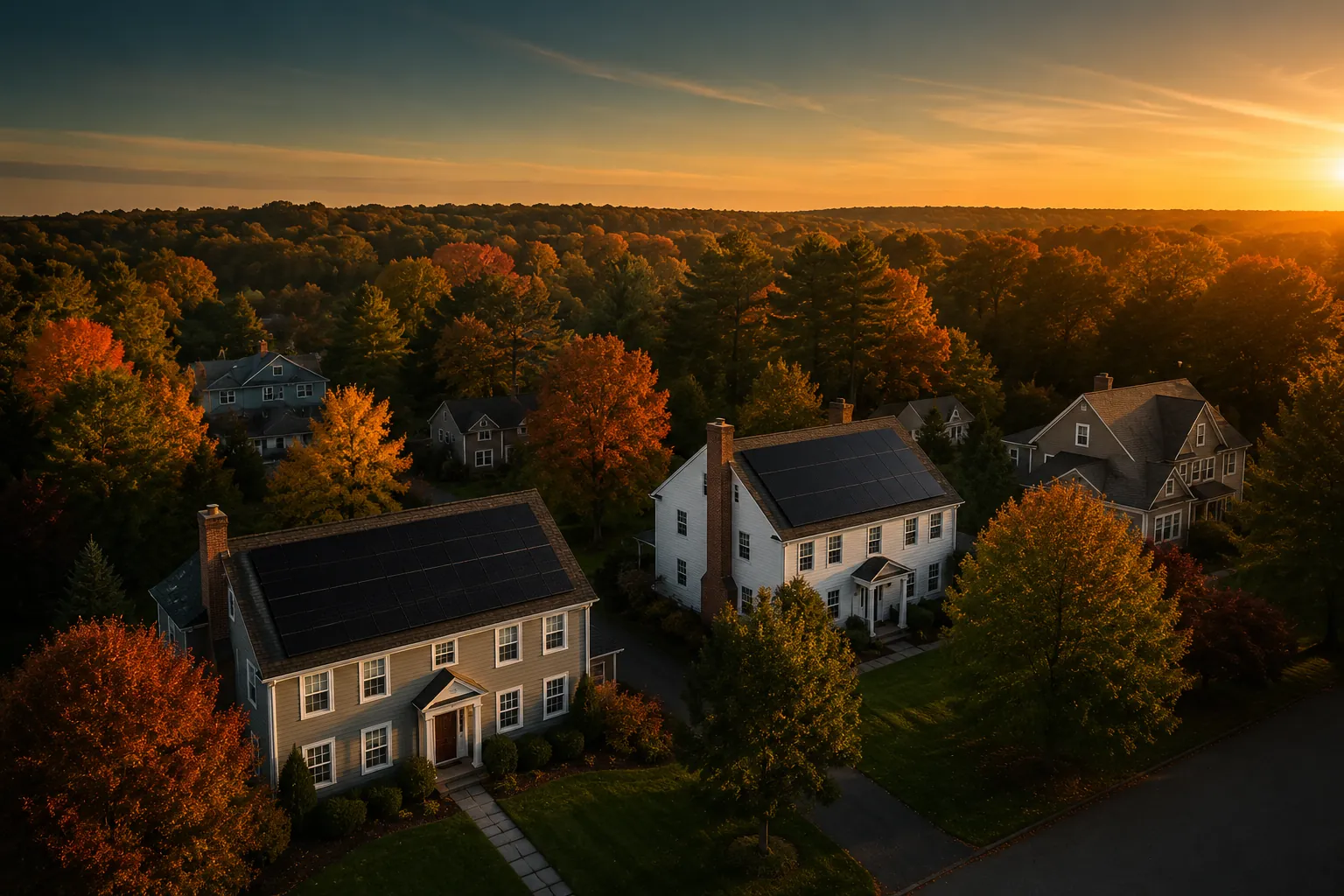
Roof Leak Under Solar Panels: Who Should Inspect It?
Use this safety-first inspection sequence to route a roof leak under solar panels to a roofer, solar technician, electrician, engineer, or insurer.
Dan Katzman
Founder, Teamsun
A roof leak under solar panels usually needs a roofer and a qualified solar service provider to coordinate the first complete inspection. Add a licensed electrician when water may have reached wiring or electrical equipment. Add a structural professional or building official when the roof, deck, framing, or ceiling may be unstable. Call 911 for smoke, fire, arcing, shock, collapse signs, or another immediate threat.
Teamsun offers solar maintenance and repair, but this page does not promise emergency response, roofing work, electrical work in every state, service for every solar brand, or a diagnosis from photos. Teamsun must confirm that its current location, equipment, licensing, access, and trade scope fit the request before anyone schedules work.
The short answer: Protect people first. Do not climb onto a wet or solar-covered roof, open electrical equipment, disconnect modules, probe a wet ceiling, or apply sealant. Preserve the as-found condition with safe photos and records. Then require one written inspection plan that assigns roof, solar, electrical, structural, insurance, and interior-water responsibilities before any panel is moved or material is opened.
This guide answers who should inspect and in what order. It does not decide fault or payment. Use Teamsun’s separate guide to who may pay for a solar roof leak after evidence identifies the cause and you have reviewed the contract, warranty, ownership, and insurance terms.
Who should inspect a roof leak under solar panels first?
The first call depends on the most urgent observed condition, not on who installed the panels. A normal active drip with no electrical or structural warning usually calls for a coordinated roofer-and-solar inspection. Visible electrical involvement calls for a licensed electrician or emergency responder first. Structural warning signs call for evacuation and the fire or building authority before a contractor enters.
Use this routing matrix before booking a generic “free roof estimate” or solar truck roll:
| What you observe | First contact | Next coordinated professional | Why this order matters |
|---|---|---|---|
| Smoke, flame, arcing, burning odor, shock, or sparking wet equipment | 911; tell the dispatcher rooftop solar and any battery are present | Utility, fire department-directed electrician, then solar and roofing professionals | Life safety and scene control precede diagnosis |
| Sagging roof or ceiling, cracked framing, popping sounds, doors suddenly binding, or severe leak with deformation | Leave the area and call 911 for imminent danger; otherwise local building/fire official | Licensed structural engineer, roofer, solar provider | Nobody should load or open a potentially unstable assembly |
| Water in or immediately beside an inverter, service panel, disconnect, junction box, meter, conduit, gateway, or battery | Keep clear; qualified electrician or emergency responder based on severity | Solar service provider and roofer | Electrical safety and water-entry source are separate questions |
| Active leak below or near the array, but no visible electrical or structural warning | Roofer experienced with the installed roof type plus a qualified solar service provider | Electrician if testing, disconnecting, or premises wiring is involved | The roof specialist traces water; the solar provider controls array access and PV condition |
| Leak after wind, hail, falling branch, lifted module, or displaced rack | Keep people away from the affected roof and ground area; emergency services if immediate danger | Solar technician, roofer, electrician, and structural engineer as findings require | Storm damage can be mechanical, electrical, structural, and waterproofing-related at once |
| Leased or power-purchase-agreement system | System owner/service contact, unless an emergency requires 911 first | Owner-approved roofer, solar provider, electrician, insurer | The homeowner may not have authority to alter or remove equipment |
| Original installer is unavailable | Qualified roof professional and a solar repair company that accepts outside systems | Manufacturer, licensed electrician, engineer, insurer as needed | A replacement provider must verify system access and scope before touching it |
| Stain appears near panels but only during certain weather | Roofer or building-envelope professional plus solar provider if the array blocks access | Moisture-testing or engineering specialist if inconclusive | Wind direction, snow/ice, condensation, valleys, walls, vents, and array details can change the water path |
The U.S. Department of Energy’s photovoltaic weather-vulnerability guide explains why the two-trade approach matters: water can move horizontally before it becomes visible inside, and a professional waterproofing inspection may be needed. The guide also identifies contact and abrasion between PV equipment and a roof membrane as one possible vulnerability—not the only possible cause (DOE PV weather-vulnerability guide).
“Call the installer” is therefore incomplete advice. The installer may control the workmanship-notice process or proprietary hardware, but the roofer understands the roof assembly. Likewise, “call a roofer” is incomplete if panels block access or energized PV components must be handled. The buyer needs a coordinated scope, not competing opinions from two site visits that never examine the same condition.
When should a solar roof leak become an emergency call?
Call 911 and leave the threatened area when there is fire, smoke, arcing, shock, structural movement, collapse warning, or another immediate danger. Do not wait for a solar company or roofer to answer an online form. Tell the dispatcher and responding crew that photovoltaic panels—and a battery, if present—are on the property.
Fire and electrical stop-work signs
Treat these as emergency or qualified-electrical-service conditions rather than a roof-estimate appointment:
- visible flame, smoke, sparks, or arcing;
- a burning-plastic or electrical odor;
- a shock, tingling sensation, or suspected energized metal or water;
- water entering an electrical panel, meter, inverter, disconnect, combiner, junction box, gateway, or battery;
- exposed, displaced, crushed, or hanging conductors;
- a cracked, displaced, or storm-damaged module near an accessible area;
- abnormal heat, hissing, swelling, venting, impact damage, smoke, or fire at a battery;
- a fallen utility line or damaged service mast.
DOE notes that PV modules generate electricity when light reaches them and that rapid shutdown does not de-energize the semiconductor material itself (DOE PV wildfire and firefighter safety). Turning off an ordinary household breaker does not make rooftop modules safe to touch. The DOE fire-safety guide also identifies current traveling through water as an electrical-shock concern for emergency responders.
The Centers for Disease Control and Prevention says not to enter standing water to reach a main switch and not to operate power while standing in water. It recommends qualified electrical inspection before wet electrical equipment returns to service (CDC electrical hazards after water exposure). A solar-plus-battery home can have multiple energy sources and operating modes, so do not improvise a shutdown sequence from a generic video. Follow emergency responders, the utility, a qualified electrician, and the exact manufacturer instructions.
Structural stop-work signs
Leave the area below a wet ceiling or roof when you see sagging, a growing ceiling bulge, split or cracked framing, unusual roof deflection, cracking or popping noises, walls or masonry cracking, or doors and windows suddenly binding. Massachusetts public-safety guidance lists sagging roofs, severe leaks, cracked wood members, bowed supports, difficult doors or windows, and creaking or popping sounds among roof-structure warnings. It says to leave and call 911 from outside when structural damage is suspected (Massachusetts roof-collapse safety guidance).
Water adds weight. FEMA’s current residential wind-retrofit guide warns that saturated attic insulation can contribute to ceiling collapse and that water intrusion can damage interior finishes and contents (FEMA residential wind retrofit guide). Do not stand under a bulging ceiling, puncture it, or place a heavy container on unstable drywall. Keep people and pets away until the authority or qualified professional says the area is safe.
What can a homeowner do safely before the inspection?
From a safe floor-level location, protect people, move undamaged belongings away from dripping water, record the condition, and make the notification calls. Do not perform rooftop, attic, ceiling-opening, panel-removal, electrical, or invasive moisture work unless a qualified professional has established that the area and task are safe.
Use this first-hour checklist:
- Move people away. Close off the room, attic access, exterior fall zone, or equipment area if water, electricity, falling material, or structure could be involved.
- Escalate danger. Call 911 for the emergency signs above. Report downed service lines to the utility without approaching them.
- Record from safety. Photograph or video the stain, drip, ceiling condition, nearby equipment, and exterior roof from the ground or a safe window. Do not approach a hazard to get a label photo.
- Reduce movable-property exposure. Move furniture, electronics, rugs, and other contents only when the floor, ceiling, and electrical area are safe.
- Use non-invasive containment only if safe. A bucket on a stable dry floor may limit interior damage from a simple drip. It is not appropriate beneath a bulging ceiling or near energized equipment.
- Write a timeline. Note when the leak began, weather, wind direction, snow or ice, recent roof or solar work, whether dripping stops with rain, and any monitoring alerts.
- Notify the relevant parties. Contact the system owner or installer, roof contractor, insurer when a claim may be involved, and an inspection team suited to the observed condition.
- Preserve receipts and messages. Keep the record for temporary protection, emergency service, drying, inspection, and later estimates.
The National Association of Insurance Commissioners advises consumers who decide to file a homeowners claim to notify the insurer promptly and document damage with photos and video (NAIC homeowners claim guidance). It also cautions consumers not to feel rushed into contractor decisions. Ask the insurer what it wants preserved and whether an adjuster needs to inspect before permanent repair, while making clear that life safety and reasonable prevention of further damage come first.
Do not let documentation become a reason to delay emergency action. A firefighter may need to open the structure, an electrician may need to isolate damaged equipment, or a roofer may need an emergency dry-in. Record why immediate work was necessary, who directed it, what was changed, and what materials were retained if safe and practical.
What should you never do yourself around a solar roof leak?
Do not climb the roof, remove or lift a panel, unplug a connector, open an enclosure, operate wet equipment, probe a ceiling, drill a test hole, or smear sealant around a suspected entry point. These actions can create shock, arc, fall, fire, roof, structural, warranty, and evidence problems.
The no-DIY boundary is broader than “do not touch wires”:
- Do not walk on wet, icy, steep, fragile, or solar-covered roofing.
- Do not assume a dark or cloudy day makes PV wiring de-energized.
- Do not throw a tarp across modules, conduit, or rooftop equipment.
- Do not pressure-wash, hose-test, or flood-test the area.
- Do not disconnect modules or open rooftop junction boxes.
- Do not reset a tripped protection device repeatedly.
- Do not remove wet insulation or drywall below a suspect electrical path.
- Do not puncture a swollen ceiling to drain it.
- Do not caulk from inside the attic or cover a mount with roof cement before evidence is recorded.
- Do not let an unqualified roofer use solar modules as a work platform or move them “just a few inches.”
- Do not let a solar technician make a permanent roof repair outside the company’s verified roofing scope.
- Do not sign a broad repair authorization that permits demolition, panel removal, or replacement without a defined approval step.
OSHA identifies falls, shock, arc flash, and burns among solar-work hazards. It also notes that installed arrays reduce available roof walking space, increasing the need for proper fall protection (OSHA solar fall hazards; OSHA solar hazards). Those are employer standards, not a homeowner training course. Their practical implication is simple: a residential roof under an array is a professional worksite.
A generic “turn everything off” instruction is also unsafe. PV modules can remain energized in light, batteries can supply backed-up circuits, and equipment-specific shutdown procedures differ. If there is no immediate danger, preserve the state and let the qualified provider plan isolation. If there is immediate danger, follow 911, the fire department, utility, and manufacturer emergency instructions.
Roof and solar together
Solving the roof after the panels are up costs far more.
If the roof is within a decade of replacement, Teamsun sequences re-roofing and solar on one timeline so the array is never removed and reinstalled at your expense.
What evidence should be preserved before anyone moves panels?
Preserve the water pattern, timeline, roof-and-array condition, electrical and monitoring state, and governing documents before invasive work. The goal is not to prove fault yourself. It is to give every inspector the same reliable starting record and make later cause, scope, warranty, and insurance decisions auditable.
Build a leak evidence packet
| Evidence group | What to collect safely | What it helps establish |
|---|---|---|
| Interior condition | Wide and close photos of stain, drip, bulge, wall path, floor, contents, and affected rooms; include date/time | Location, extent, change over time, and damaged areas |
| Weather and timing | First discovery, rain/snow timing, wind direction if known, freeze/thaw, storm reports, recurrence, dry-weather behavior | Correlation without claiming causation |
| Roof exterior | Ground-level or safe-window photos of roof plane, ridge, valley, chimney, vent, skylight, gutter, array edges, displaced material | Context for professional review; not a substitute for rooftop inspection |
| Solar condition | Safe photos of labels, inverter/app alerts, production graph, device status, recent shutdowns or service | Whether the leak coincides with solar alerts or damage |
| Moisture record | Professional meter readings, thermal images, annotated moisture map, attic/deck observations | Extent and path of wet material; tool limitations must be stated |
| Solar documents | Contract, final plan set, one-line, equipment list, permits, inspections, permission to operate, array map | Installed design, equipment identity, attachment locations, responsible entities |
| Roof documents | Roof contract, product and workmanship warranties, invoices, material, age, prior repairs, pre-solar report | Actual assembly and pre-existing condition |
| Ownership and service | Purchase, loan, lease, PPA, service plan, monitoring ownership, transfer records | Who can authorize access and what notice is required |
| Event history | Recent reroof, HVAC, chimney, satellite, pest, gutter, tree, attic, electrical, or solar work | Other changes an inspector must evaluate |
| Communications | Emails, texts, case numbers, names, dates, promises, inspection requests, denial language | Consistent notice and response record |
| Temporary work | Before/after photos, invoice, materials, responder direction, removed components retained if safe | What changed before the final diagnosis |
Use a simple photo index such as A01-wide-room, A02-ceiling-close, B01-array-ground-view, and C01-monitoring-alert. Put the same identifiers on an annotated floor plan or roof sketch. Preserve original files and timestamps rather than relying only on screenshots compressed by messaging apps.
Monitoring data does not prove why a roof leaked, but it can show whether devices stopped reporting, an array section went offline, a ground-fault or isolation event appeared, or the system continued producing normally. Export data before an account transfer, reset, or equipment change. For an electrical alert, use the separate solar inverter error guide rather than interpreting a generic code table.
Record absence as carefully as presence. “No inverter alert observed at 10:15 a.m.” is better than “the electrical system was fine.” “No visible damage from the ground” is not “the roof was undamaged.” Good evidence distinguishes observation, measurement, inference, and conclusion.
Why might both a roofer and solar technician be necessary?
A roofer can evaluate water management and roof materials but may not be authorized or qualified to disconnect, remove, reinstall, test, or commission PV equipment. A solar technician can evaluate the array and control access but may not be qualified to diagnose or repair the roof assembly. The inspection should combine both scopes without pretending one credential covers the other.
The roof side may need to examine:
- shingles, slate, tile, metal, or membrane condition;
- underlayment, flashing, fasteners, seals, seams, and terminations;
- valleys, sidewalls, chimneys, vents, skylights, ridges, gutters, drains, and ice-dam paths;
- deck, sheathing, insulation, attic ventilation, condensation, and earlier repairs;
- attachment and conduit-penetration integration with the actual roof assembly;
- water-path testing and the limits of non-destructive inspection.
The solar side may need to examine:
- module, rail, attachment, flashing, conduit, wire-management, and junction-box condition;
- array movement, abrasion, loose or displaced equipment, and storm impact;
- safe isolation, equipment handling, removal boundary, storage, and reinstallation;
- electrical testing before and after work;
- manufacturer instructions, proprietary hardware, portal access, and recommissioning;
- updated array map, serials, settings, monitoring, and closeout.
NREL’s O&M best-practices report says roof requirements may include removing PV components to investigate or repair a leak, rendering the system safe for roof work, and following roof-manufacturer requirements for new flashings or alterations (NREL PV and energy-storage O&M best practices). IronRidge’s current flush-mount manual, as one manufacturer example, requires compatible membrane flashing and tells installers to use a qualified roofer for a specified low-slope flashing path (IronRidge XR Flush Mount manual). Your installed racking may use different instructions.
One integrated company can provide both trades, or separate companies can coordinate. Either approach is acceptable only when the contract names the legal entities, responsible supervisors, licenses/registrations, insurance, work boundaries, warranty handling, and one person accountable for sequence and handoffs.
When is a licensed electrician or structural professional needed?
Use a licensed electrician when the inspection requires electrical isolation, measurements, opened enclosures, wet-equipment evaluation, premises wiring, service equipment, or return-to-service decisions. Use a licensed structural engineer or other authority-accepted design professional when roof framing, deck capacity, attachment loads, storm displacement, material decay, or structural safety cannot be resolved by a roofing condition report.
Electrical scope is state- and task-specific
Solar, roofing, and electrical permissions differ across New England. Verify the business and individual credentials for the exact work, not just a company registration.
- Connecticut: DCP says PV-1/PV-2 scope includes specified PV repair and maintenance, but connection to existing building circuits or the utility meter requires an E-1/E-2 license holder (Connecticut solar trade scope).
- Massachusetts: the Board of State Examiners of Electricians interprets PV systems and associated frames, racks, rails, and modules as work to be assembled and installed by a licensed electrician (Massachusetts PV licensing guidance). Confirm repair and permit scope with the local inspector of wires.
- Rhode Island: the contractor-registration board directs electrical trade licensing to the Department of Labor and Training, while construction and roofing entities may also need CRLB registration or licensing appropriate to the project (Rhode Island contractor registration).
The credential check should name the person who will isolate the system, the person who may remove modules or racking, the company making the roof repair, and the person who will test and recommission. Teamsun’s solar installer license guide explains how to match each credential to the legal business and scope.
Structural involvement is a findings gate
A structural professional is not mandatory for every stain. Add one when the inspection reveals or reasonably suspects:
- sagging, cracked, split, bowed, or displaced framing or decking;
- rot or long-term saturation at attachments or bearing points;
- a large wet area that changes material capacity or requires significant replacement;
- storm uplift, impact, array movement, loose anchors, or damaged connections;
- a roof assembly different from the permitted or engineered basis;
- proposed attachment relocation or reinforcement;
- uncertainty about whether people can safely enter, load, remove, or rebuild the area.
DOE says a consulting engineer may be appropriate for significant structural vulnerabilities, complex fastener or bolted-joint failures, manufacturer concurrence, or substantial corrective actions (DOE PV weather-vulnerability resource). Ask for a written question and deliverable: safe-access opinion, damage assessment, temporary shoring direction, repair detail, stamped calculation, or post-repair verification. “Engineer review included” is too vague.
What is the correct coordinated inspection sequence?
The safest useful sequence moves from emergency triage to non-invasive evidence, controlled access, authorized testing, targeted opening, repair design, and documented return to service. The team should agree on stop conditions and change authorization before anyone starts.
A ten-stage leak inspection plan
- Triage life safety. Record emergency conditions, access restrictions, responders, utility direction, and whether the building or affected area may be occupied.
- Identify ownership and control. Confirm who owns the array, who can authorize work, which provider controls monitoring, and which installer or manufacturer must receive notice.
- Preserve the as-found record. Complete the photo index, timeline, documents, monitoring export, prior-work history, and temporary-action record.
- Hold a joint scope call. The roofer and solar provider define who inspects inside, who accesses the roof, who controls PV safety, and which observations require an electrician, engineer, insurer, or authority.
- Perform non-invasive interior review. A qualified professional maps visible water, moisture, deck/framing condition, insulation, penetrations, and likely travel paths without opening unsafe material.
- Perform coordinated exterior and array review. The team records roof details, attachments, flashing, drainage, adjacent penetrations, array condition, conduit, wire management, storm evidence, and access limits.
- Select controlled tests. If needed, use a written protocol for moisture measurement, thermal imaging, or water testing with weather, sequence, area, duration, observers, abort criteria, and protection of electrical equipment.
- Authorize targeted exposure. If panels, roofing, drywall, insulation, or flashing must move, approve the exact area, trade, safety plan, evidence method, custody, temporary dry-in, and price/change-order boundary first.
- Issue one findings package. Combine observations, measurements, photos, diagrams, limitations, probable source or unresolved alternatives, safety status, repair options, and further-test needs.
- Approve repair and closeout. Define roof repair, solar removal/reinstallation, electrical testing, structural work, permits, manufacturer steps, monitoring, leak verification, and records required before return to service.
DOE’s current PV O&M lifecycle guidance uses a similar control principle: inspect and test, submit a baseline report and recommended corrective services, obtain approval, perform corrective work, validate normal conditions, and deliver the final report (DOE operate and maintain an existing PV system). A residential project may be smaller, but the separation between diagnosis, approval, repair, and acceptance remains valuable.
Do not let the first contractor erase the condition that the second contractor needs to see. If emergency mitigation requires change, the two trades can sometimes join by live video, shared annotated photos, or a written opening protocol. The inspection contract should say how quickly findings are shared and who has authority to stop work.
Service and diagnostics
A system that stopped producing rarely fixes itself.
Teamsun services arrays it did not install, including systems whose original installer is gone. Diagnosis comes first, with the findings written down before any parts are quoted.
How should moisture, thermal, and water testing be controlled?
Testing should answer a defined question and disclose its limits. A moisture-meter number, thermal image, or hose test is not automatically the leak source. Roof material, weather, temperature, insulation, air leakage, previous rain, equipment shading, and test technique can affect results.
Use a test authorization table:
| Test | Useful question | Limit or risk | Required record |
|---|---|---|---|
| Interior moisture readings | Where is material currently wet or drying? | Surface and depth vary; reading may not locate entry | Meter/model, material, location map, date/time, comparative readings |
| Infrared scan | Where are temperature anomalies consistent with possible moisture? | Solar loading, insulation, air leaks, weather, and roof overburden affect interpretation | Conditions, equipment, annotated images, verification method |
| Controlled water test | Which isolated roof detail reproduces entry? | Can add damage, confuse paths, and expose electrical equipment | Written sequence, zone, flow/duration, observers, abort criteria, result |
| Selective roof opening or core | What layers are wet, deteriorated, or incorrectly built? | Destructive; creates a new opening and may affect warranties | Exact location, pre/open/close photos, samples, repair detail, authorization |
| Panel/attachment removal | What is hidden below the module, rail, mount, or flashing? | Electrical, fall, equipment, roof, custody, and recommissioning risks | Shutdown/isolation, serials, layout, hardware, opening photos, storage, reinstallation record |
| Electrical testing | Has water or mechanical damage affected safe operation? | Requires proper qualification, equipment, and model-aware procedure | Test method, readings, limits, affected circuit/device, conclusion, return-to-service status |
DOE notes that infrared inspection may identify hot or cool areas associated with moisture under a membrane but still calls for professional evaluation (DOE PV weather-vulnerability guide). The National Roofing Contractors Association describes core samples as a way to verify infrared findings on certain roof assemblies (NRCA wet-insulation infrared research). Those tools are not interchangeable and may be unsuitable for a particular residential roof.
Avoid uncontrolled “prove it” testing. NRCA warns that flood testing low-slope roofs can create damage and may not verify a leakage path (NRCA flood-testing caution). A targeted water test should start below suspected details and progress methodically, with one variable at a time. The team should stop for electrical exposure, structural change, uncontrolled water, or evidence that the test itself is causing harm.
What must a destructive-testing authorization say?
A destructive-testing authorization must identify what may be opened or removed, who performs each task, why it is necessary, how the condition will be documented, how the property will be protected, and who can approve additional work. It should not become a blank check for demolition or permanent repair.
Require these terms before a panel, attachment, roof layer, ceiling, insulation, or wall is disturbed:
- Target question. State the uncertainty the opening is intended to resolve.
- Exact boundary. Mark modules, roof coordinates, interior area, layers, and maximum opening size.
- Qualified parties. Name the roof, solar, electrical, structural, and remediation entities and their specific tasks.
- Safety and access. Identify isolation, fall protection, weather limits, occupancy exclusion, and stop-work conditions.
- Ownership permission. Confirm the homeowner, lessor/PPA owner, insurer, manufacturer, or other party has provided required consent or notice.
- Evidence protocol. Require wide, close, measurement-scale, layer-by-layer, and identification photos before, during, and after opening.
- Material custody. Say whether removed flashing, fasteners, sealant, shingles, membrane, wood, or hardware is retained, labeled, photographed, or discarded.
- Temporary protection. Define same-day dry-in, electrical protection, overnight state, weather response, and responsibility if the repair cannot proceed.
- Change-order gate. Set the dollar and scope limit that cannot be exceeded without written owner approval, except emergency safety work expressly defined.
- Restoration standard. State who closes the opening, whose installation detail controls, and what warranties or written limitations apply.
- Testing and closeout. Identify roof verification, electrical test, recommissioning, monitoring, permit/inspection, and final report.
- Unresolved-result plan. Say what happens if the opening does not identify the source.
Manufacturer instructions matter. Tesla, for example, allows qualified third-party panel removal and reinstallation but tells owners to review the applicable limited warranty and warns that it is not responsible for third-party workmanship or resulting system damage (Tesla panel removal and reinstallation). That is a Tesla-specific process, not a universal rule. Obtain the current procedure for the installed equipment, ownership agreement, roof system, and mounting hardware.
If litigation or a disputed insurance/workmanship claim is plausible, ask counsel or the insurer whether a mutually observed inspection, independent building-envelope consultant, engineer, or evidence-retention protocol is appropriate. This is not legal advice; it is a reason to avoid irreversible work without notice when safety allows time.
What should the inspection report and repair quote deliver?
The inspection report should separate facts from opinions, explain its limits, identify any remaining uncertainty, and convert findings into a trade-by-trade scope. The quote should price the approved solution without hiding panel access, electrical testing, roof restoration, permits, or recommissioning in vague allowances.
Inspection deliverables
Require:
- service address, inspection date, weather, attendees, credentials, and access limits;
- system owner, solar installer, equipment, roof material/age, and relevant documents reviewed;
- annotated interior floor plan, roof sketch, array layout, and suspected/confirmed test zones;
- numbered photos with captions and orientation;
- moisture, thermal, water, electrical, or structural test method and results;
- observed facts separated from possible causes and the final professional opinion;
- explicit statement when cause remains inconclusive;
- immediate safety or temporary-protection requirements;
- roof, solar, electrical, structural, remediation, insurer, manufacturer, utility, and permit next steps;
- whether panels or roof material must be removed and why;
- expected service state until repair: operating, partially isolated, shut down, or unresolved;
- inspector signature and license/registration where applicable.
Repair quote deliverables
| Scope line | Required detail |
|---|---|
| Mobilization and diagnostic credit | What was already paid and whether any amount applies to repair |
| Solar isolation and access | Exact modules/array area, shutdown, disconnect, removal, handling, storage, and temporary condition |
| Roof work | Material, layers, deck/sheathing, flashing, underlayment, fasteners, compatible products, and repair dimensions |
| Electrical work | Tests, components, licensed contractor, permit, correction, and return-to-service acceptance criteria |
| Structural work | Engineer deliverable, reinforcement/repair detail, inspection, and signoff |
| Interior water work | Drying, insulation, drywall, finish, mold/air-quality boundary, and separate provider if needed |
| Reinstallation | New/reused mounts and hardware, manufacturer basis, array map, torque/installation record, wiring, labeling |
| Recommissioning | Electrical results, device communication, monitoring, alerts, production check, serials, settings |
| Permits and authorities | Who files, fees/allowance, inspection correction responsibility, closeout documents |
| Warranty and insurance | Claim role, covered/uncovered assumptions, workmanship promise, exclusions, insurer coordination |
| Schedule and weather | Trade sequence, roof-open limit, dry-in, delay responsibility, property access |
| Price controls | Fixed items, allowances, unit prices, change-order approval, deposit and payment milestones |
FTC consumer guidance recommends checking licenses and insurance, comparing written estimates, and signing a reviewed written contract before non-emergency home repair begins (FTC home-repair scam guidance). State rules add local requirements. Connecticut advises verifying both credentials and their fit to the scope (Connecticut contractor credential alert). Massachusetts encourages detailed written home-improvement contracts (Massachusetts HIC homeowner resources). Rhode Island requires construction and repair contractors to hold the applicable registration and directs consumers to verify it (Rhode Island CRLB consumer checklist).
Next step
Turn this guide into a decision you can act on.
Teamsun reviews your bills, roof, and any proposals you already hold, then puts the options in writing. No obligation to buy.
What should happen after the inspector identifies a likely cause?
Match the next action to the evidence, safety condition, system ownership, and repair boundary. Do not jump from “water is below the array” to full roof replacement, universal re-flashing, or a solar-system upgrade without a documented reason.
| Inspection outcome | Next action | Required proof before closeout |
|---|---|---|
| Leak is at a non-solar roof detail and array does not block access | Roofer repairs under applicable roof process; solar provider confirms whether system protection is needed | Repair photos, material/detail, dry-in, leak verification, no array disturbance or documented protection |
| Suspected attachment/flashing area is hidden | Authorized solar removal plus roofer inspection of the exposed assembly | Isolation, serial/layout record, layer-by-layer photos, cause opinion, repair detail |
| Array contact or abrasion damaged roof material | Coordinate roof repair and PV support/clearance correction | Corrected contact/clearance, compatible roof repair, array stability, final photos |
| Water reached PV or premises electrical equipment | Licensed electrical and solar evaluation before return to service | Test results, replaced/approved components, permits if required, safe operating status |
| Roof deck or framing is deteriorated | Structural/roof assessment and repair design; expand opening only by authorization | Engineer or authority-accepted detail as applicable, completed repair, inspection/signoff |
| Storm displaced modules, racking, or roofing | Keep area controlled; solar, roofing, electrical, structural, insurer paths as findings dictate | Mechanical and electrical tests, roof repair, array recommissioning, claim documentation |
| Condensation or non-roof water source is more likely | Building-envelope, HVAC, plumbing, or other specialist follows evidence | Source-specific report and moisture resolution; do not alter solar without need |
| Cause remains inconclusive | Independent roof consultant/building-envelope specialist or engineer designs the next test | Written alternatives, selected test method, authorization, result, updated conclusion |
| Roof needs broad replacement | Plan formal panel removal, roof work, and reinstallation rather than repeated patching | Ownership approval, storage, roof closeout, revised attachment plan, permits, electrical tests, monitoring |
| Solar equipment is damaged or obsolete during access | Separate repair-versus-upgrade decision after roof is stable | Compatibility, manufacturer support, permit/utility impact, installed price, warranty, commissioning |
This page deliberately stops before allocating the bill. Cause, contract, warranty, system ownership, insurance policy, notice, and applicable law determine who may ultimately be responsible. Continue with who pays for a roof leak after solar installation once the inspection record exists.
If the array must stay off, ask the solar provider to document which portion is isolated, why, who can restore it, whether the battery or backup mode is affected, and what monitoring state is expected. Do not accept “system shut down” without a site-specific handoff.
How can Teamsun evaluate a solar leak inspection request?
Teamsun can review an intake against its published maintenance and repair service and system-upgrade service, but the intake is not an emergency dispatch, diagnosis, roofing commitment, warranty acceptance, or promise that Teamsun can service the installed equipment. Immediate danger belongs with 911, the fire department, utility, or other appropriate emergency authority.
Send this intake packet through the Teamsun contact form:
- service address and safe contact information;
- whether anyone is in immediate danger and whether emergency services attended;
- first-discovery date, leak timeline, weather, and recent roof/solar/property work;
- safe interior and ground-level exterior photos;
- ceiling, attic, roof, electrical, and array conditions already observed by professionals;
- solar ownership type and original installer/system owner;
- equipment list, final one-line, array map, permit/PTO records, and monitoring screenshots;
- roof material, age, installer, warranty, and prior repair history;
- insurer claim number and adjuster instructions, if applicable;
- manufacturer or installer case numbers;
- written reports, estimates, tests, and temporary-work records;
- the specific help requested: solar access, electrical diagnosis, coordinated inspection, removal/reinstallation, repair, or upgrade review.
Teamsun should respond by confirming what it can and cannot provide, whether a roofer/electrician/engineer must lead or join, what equipment and portal access it supports, who owns coordination, what the diagnostic costs and delivers, and which conditions stop the visit. If the request is outside Teamsun’s verified scope, the responsible answer may be a referral or a requirement that another professional act first.
An eventual battery addition or system upgrade should not be bundled into an urgent leak decision until the roof is stable and the existing system’s safe state is known. If an upgrade is later rational, use the existing records to compare it separately through battery retrofit or system-upgrade planning.
Frequently asked questions about roof leaks under solar panels
Should I call a roofer or solar company first for a leak under panels?
Call both for a coordinated inspection when there is no emergency. The roofer evaluates the roof and water path; the qualified solar provider controls array access, PV handling, testing, and recommissioning. Electrical or structural warning signs change the first call.
When should I call the fire department for a solar roof leak?
Call 911 for smoke, flame, arcing, burning odor, shock, sparking wet equipment, structural movement, collapse signs, or another immediate threat. Tell the dispatcher that rooftop PV and any battery are present.
Can a roofer inspect under solar panels without removing them?
A roofer can often begin with interior and accessible exterior evidence, but hidden attachments, flashing, or roof material may require controlled panel removal. The solar scope, ownership permission, safety plan, and reinstallation record should be defined before removal.
Can a solar technician repair the roof leak?
Only if the company and assigned worker have verified authority, insurance, roofing competence, and a written roof-repair scope for that location and material. Solar credentials alone do not prove roofing scope.
Does a ceiling stain directly below a panel prove the mount leaks?
No. Water can travel along underlayment, decking, framing, fasteners, insulation, or another path before appearing. The stain locates observed damage, not necessarily the entry point or responsible component.
Should I shut off my solar system when the roof leaks?
Do not improvise a universal shutdown. Keep clear of wet equipment and follow emergency responders, the utility, a qualified electrician, and the exact system instructions. PV modules can produce DC power in light even when an AC breaker is off.
Can I put a tarp over solar panels during a leak?
Do not climb onto the roof or tarp over modules, wiring, conduit, or equipment yourself. A qualified team must plan fall protection, electrical safety, attachment, drainage, weather, and temporary dry-in without worsening the hazard.
Should someone hose-test the roof to find the leak?
Only under a written, controlled professional protocol. Uncontrolled water can increase damage, confuse the path, load wet material, and expose electrical components. The protocol needs zones, sequence, observers, limits, and stop criteria.
What if the original solar installer is out of business?
Assemble the system and ownership records, contact the equipment manufacturers or system owner where relevant, and find a qualified solar service provider that accepts outside systems. Pair it with a roofer experienced in the roof type; confirm portal, parts, licensing, insurance, and removal capability before booking.
Should I contact homeowners insurance before repair?
If a claim may be involved, ask the insurer promptly what it wants documented and whether an adjuster needs to inspect. Do not delay life-safety work or reasonable steps to prevent further damage. Preserve before/after photos, directions, invoices, and receipts.
Who should inspect a sagging ceiling below solar panels?
Keep people away. Call 911 for imminent collapse signs or immediate danger; otherwise contact the local building/fire authority and an appropriately licensed structural professional. A roofer or solar technician should not enter or load the area until structural safety is established.
Will thermal imaging find the exact roof leak?
Not always. It can identify temperature anomalies consistent with possible moisture, but weather, insulation, air leakage, roof materials, and solar loading affect results. Findings may need moisture readings or targeted destructive verification.
What should a solar leak inspection report include?
It should include annotated photos and diagrams, materials and equipment, access limits, tests and conditions, observed facts, possible and supported causes, remaining uncertainty, safety status, trade-by-trade repair scope, panel-access needs, and closeout requirements.
Who should remove panels for a roof inspection?
Use a provider legally and technically qualified for the installed PV system, location, ownership, and hardware. Require safe isolation, serial and layout records, protected storage, roof handoff, reinstallation, electrical testing, monitoring, permits, and warranty documentation.
Can I approve panel removal before the insurer or installer inspects?
Ask the insurer, system owner, installer, and warranty provider what notice or inspection they require when safety allows. For emergency work, protect people and property first, then document why removal could not wait and what changed.
What if the roofer and solar company blame each other?
Request their observations, measurements, photos, test methods, limitations, and cause reasoning in writing. If they remain inconsistent, use an independent building-envelope consultant or engineer to define a controlled investigation. Payment responsibility is a separate contract, warranty, insurance, and legal question.
Sources and research method
This guide was researched on August 10, 2026. Research covered current SERPs, People Also Ask-style questions, roofing and solar service pages, homeowner forum discussions, federal safety and O&M sources, state contractor and electrical authorities, insurance guidance, and manufacturer installation/removal documents. Forums and competitors were used to identify real questions and content gaps—not as evidence for safety, diagnosis, price, liability, or Teamsun capabilities.
Primary and technical sources include:
- DOE PV System Owner’s Weather-Vulnerability Guide
- DOE Operate and Maintain an Existing PV System
- NREL PV and Energy Storage O&M Best Practices
- DOE Solar Fire-Safety Guide
- CDC Electrical Hazards After Water Exposure
- OSHA Solar Hazards
- Massachusetts Roof-Collapse Safety Guidance
- FEMA Residential Wind Retrofit Guide
- NAIC Homeowners Claim Guidance
- FTC Home-Repair Scam Guidance
- Connecticut Solar Trade Scope
- Massachusetts PV Licensing Guidance
- Rhode Island Contractor Registration
- IronRidge XR Flush Mount Manual
- Tesla Panel Removal and Reinstallation
The reviewed search results commonly jumped from a ceiling stain to a mounting defect, supplied generic homeowner shutdown steps, or treated panel removal and roof repair as one undifferentiated service. Representative pages included Solar Optimum, Rooftop Power, Powur Care, Palmetto, Braga Brothers, and local roofing providers. Homeowner discussions repeatedly raised orphaned systems, roofers unwilling to move panels, solar providers unwilling to repair roofs, repeated caulk attempts, unclear insurance timing, and vendors blaming one another. This page closes that gap with a professional-routing matrix, an evidence file, a coordinated sequence, controlled-testing rules, and explicit quote deliverables.
Request a roof-and-solar inspection scope review
A useful request starts with the safety condition, not a conclusion about fault. It also starts with a defined deliverable, not an authorization to remove panels or patch the roof on sight.
Send Teamsun the leak timeline, safe photos, roof and solar records, monitoring evidence, ownership, prior service history, existing reports, and any insurer or manufacturer instructions. Teamsun can evaluate whether its current service scope fits the request and what roofing, electrical, structural, manufacturer, ownership, or insurance coordination must happen first.
Request solar diagnostics through the Teamsun contact form. Call 911 instead of waiting for a form response when fire, electrical shock, arcing, collapse, or another immediate danger may be present.
Written by
Dan Katzman
Founder, Teamsun
Teamsun writes practical solar guidance to help property owners compare equipment, project scope, costs, and long-term service before making a decision.
Keep going.
Solar Inspection Before Buying a Home With Panels
Use this solar inspection before buying a house dossier to verify ownership, records, production, roof, electrical condition, transfers, and closing duties.
Dan Katzman
Founder, Teamsun
Who Pays for a Roof Leak After Solar Installation?
Who pays for a solar roof leak depends on its cause, contract, warranties, ownership, and insurance. Use this evidence-first response plan.
Dan Katzman
Founder, Teamsun
Solar Inspection After a Storm, Hail, or Lightning Event
Use this safety-first solar storm inspection guide to document hail, wind, lightning, flood, battery, roof, and production concerns before repair.
Dan Katzman
Founder, Teamsun